

Risks of Using Lasers Without Protection
Using lasers without proper eye protection can have severe consequences.
Associated risks include:
- Retinal Injuries: Laser radiation can damage the retina, causing permanent vision loss.
- Ocular Burns: Direct exposure to laser radiation can cause burns to the cornea and other eye structures.
- Damage to Central and Peripheral Vision: Depending on the intensity and wavelength, the laser can affect both central and peripheral vision.
In conclusion, eye protection in laser use should not be underestimated. With the variety of lasers available and associated risks, it is crucial to select appropriate protection according to established regulations. By adopting preventive measures and adhering to regulations, we can enjoy the benefits of lasers without compromising visual health.

How to Choose Laser Safety Products for Industrial Use?
The Key Is Not "Certified" It's "Truly Protective"!
As the laser industry continues to grow rapidly, a lack of understanding of laser safety standards has led dangerous misconceptions-such blindly pursuing to as "CE certified" marked products or simply choosing the "lowest price". These practices pose serious safety risks to end-users and the entire industry.
Some manufacturers claim their laser protection products are "CE certified" based on EN12254 test reports. However, EN12254 is not necessarily applicable to high-power industrial laser. EN12254 was developed by CEN/TC85, Eye Protection (secretariat: AFNOR, France) and is a device standard. It's important to verify whether the issuing body is actually qualified to certify devices under this category.
1. Power Threshold Limitations:
EN12254 clearly states that it applies only to low-power lasers with average power < 100W, or single pulse energy < 30J. This means EN12254 has power threshold limitations and is not suitable for high-power applications such as laser welding, cleaning, cutting, or cladding, where lasers typically range from several hundred to several thousand watts. DIN EN 12254:2012-04 EN 12254:2010-AC 2011 (E) : This European Standard specifies functional requirements and a product labelling applicable to temporary and permanent passive guards (in the following called screens) for protection against laser radiation. This standard includes test methods for testing functional performance and the specification of the user documentation to be supplied with the product.
The screens are designed to protect the user from
unintentional exposure to direct and/or diffuse laser radiation
a time-Iimited exposure to laser radiation, based on the functional requirements determined by risk assessment
This European Standard applies to supervised screens for installations in working places at which laser radiation up to a maximum mean power of 10 or single pulse energy of 30 J occurs within the spectral range between 180 nm (0.18 µm) and 10 6nm (1.000 µm).
This European Standard (EN12254) applies to the protection against laser radiation only. This standard does not apply to other hazards including hazards from secondary radiation that can arise during, for example, material processing
This European Standard gives guidance on how to select such screens:
Laser enclosures and housings that are supplied as part of the laser product or are supplied to be fitted to a Laser system to form a laser product (according to EN 60825-1) are not considered to be within the scope of the standard.
Taking a manufacturer's EN12254 test report as an example: This test report states that, according to the EN12254 standard, in the 1050-1400 nm wavelength range, the protection level is D AB5.
Referring to the standard table, the irradiance is 2.5 × 100 W/m2. When converted, this equals 2.5 W/mm2. During actual testing, however, the power applied to the surface of the protective curtain was only about 2 W (the test report indicates the actual applied power was 2.35 W). It is not difficult to see that the safety capability of this curtain is only equivalent to that of a basic product and is seriously misaligned with the demands of industrial applications.
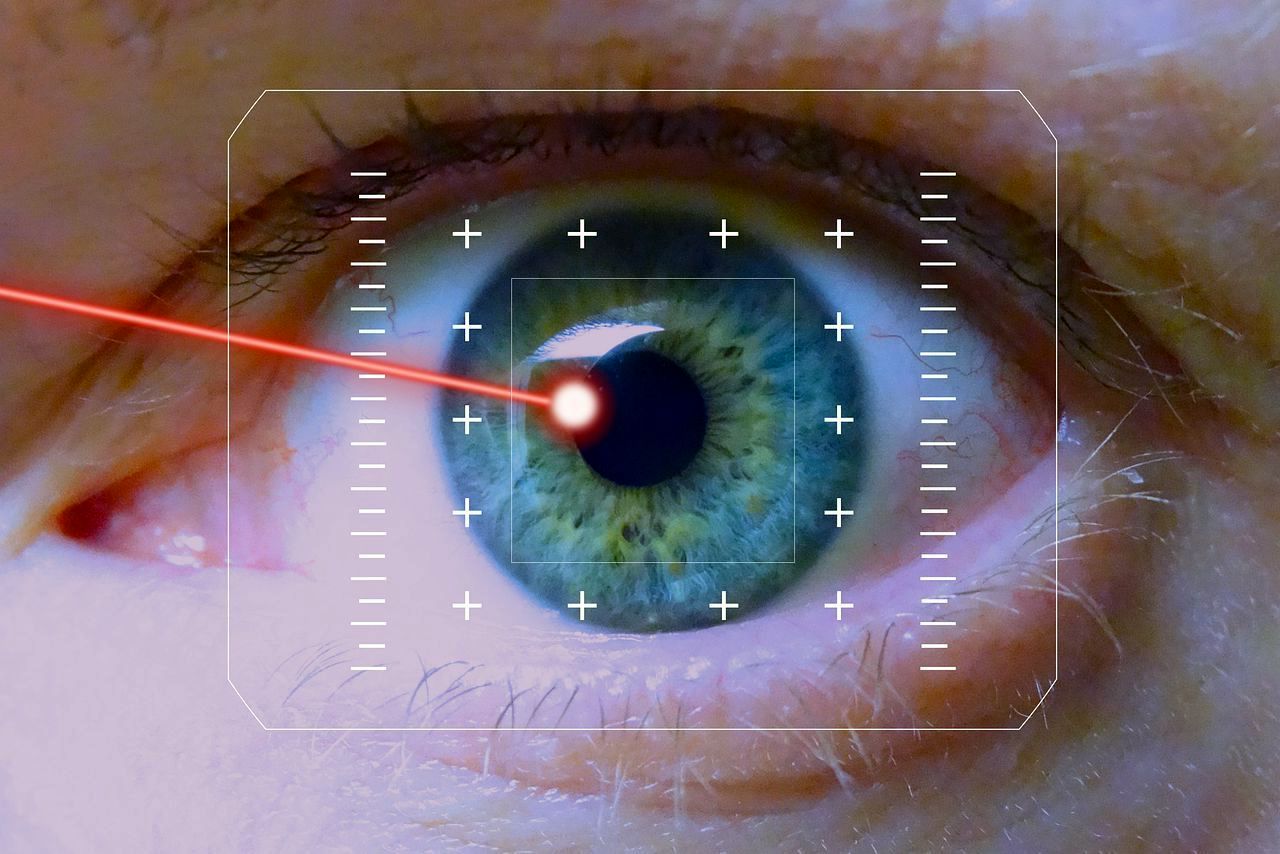
Key Criteria for Choosing Eye Protection Against Laser Radiation
Choosing the appropriate eye protection against laser radiation is crucial to ensure eye safety
Here, we explore the key criteria to consider when selecting eye protectors to shield the eyes of workers and professionals interacting with lasers.
Laser Wavelength and Power:
Lasers emit radiation at different wavelengths, and eye protection must be designed to specifically filter the laser’s wavelength. Additionally, the laser’s power influences the choice of protector, as higher power requires greater attenuation.
Attenuation Level:
Attenuation refers to the eye protector’s ability to reduce laser radiation intensity. Protectors must comply with the attenuation standards set by EN207 regulations. The attenuation classification will indicate the amount of radiation the protector can effectively block.
Filter Type:
There are different types of filters designed to protect against various laser wavelengths. Protectors can be absorptive, reflective, or a combination of both. It is essential to select the filter type that matches the specific application and type of laser used.
Coverage Area:
Protection should fully cover the eyes and surrounding vulnerable areas. Eye protectors must provide adequate coverage to prevent accidental exposure of the eyes to laser radiation from different angles.
Working Conditions:
Specific working conditions, such as temperature, humidity, and the presence of chemicals, can affect the effectiveness and durability of eye protectors. Ensuring that protectors are resistant to adverse conditions will guarantee their efficacy over time.
Comfort and Ergonomics:
Comfort is important for continuous use of eye protectors. They should be ergonomic, fit properly to the facial contour, and not interfere with peripheral vision. This ensures that workers can perform their tasks efficiently without compromising safety.
CE Marking and Regulatory Compliance:
To ensure safety in laser use, there are international standards and regulations that establish requirements for eye protection. Two key standards are EN207 and EN208:
- EN207: Defines the requirements for eye protection filters against laser radiation. It specifically classifies filters based on their attenuation capacity and the wavelength they protect against.
- EN208: Focuses on laser safety glasses and protectors designed for low-power applications. It sets requirements for visibility, impact resistance, and side protection.
It is essential that eye protectors comply with established standards, especially EN207 and EN208. The CE marking indicates that the product meets essential health and safety requirements, providing a guarantee of quality and regulatory compliance.
Usage and Maintenance Instructions:
Protectors should come with clear instructions on their use and maintenance. Users must follow these guidelines to ensure the continuous effectiveness of the eye protectors and prolong their lifespan.
In conclusion, selecting eye protectors for laser radiation protection requires careful evaluation of various factors. By considering the laser wavelength, power, attenuation level, and other criteria, appropriate protective equipment can be chosen to ensure eye safety in environments where lasers are used.
